
We’ve all been there—you fall in love with a pattern, but the yarn it calls for is too warm, too pricey, too hard to find, or just not your style. The good news? You don’t have to stick with the original yarn to make something beautiful.
Yarn substitution is one of those skills that can feel intimidating at first, but it opens up a whole world of possibilities once you get the hang of it.
This blog post is all about how to swap yarn with confidence.
Maybe you’re looking to lighten up a winter pattern for spring, use a fiber that fits your lifestyle better, or just pull something from your stash that you already love.
Whatever your reason, we’re sharing simple strategies, helpful tips, and a few of our favorite yarn swap examples to get you started.
Start with Gauge
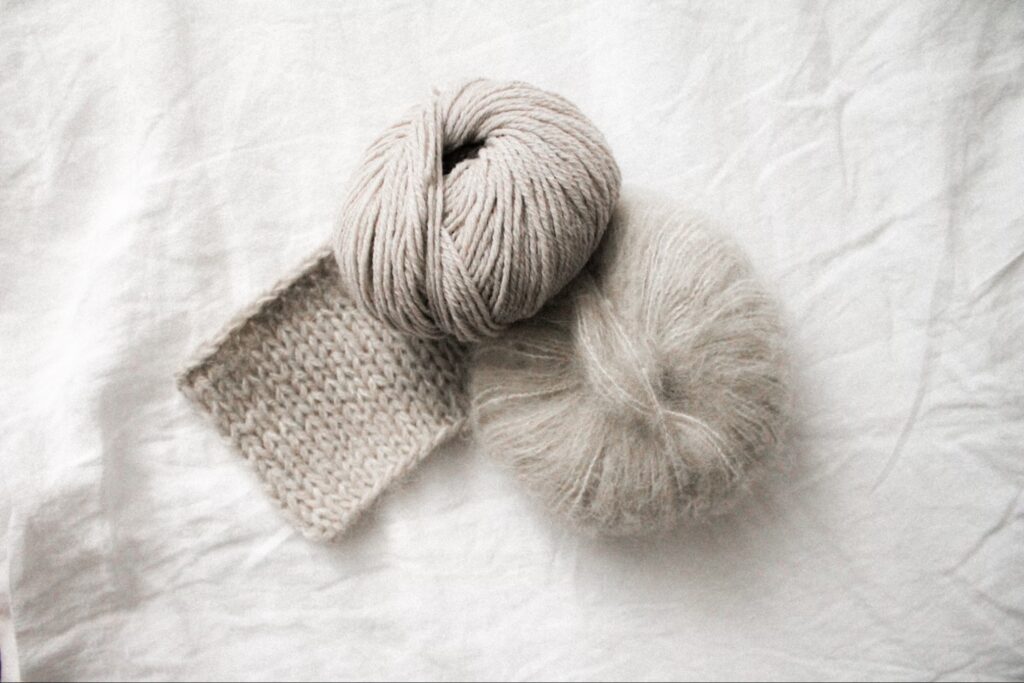
When you’re substituting yarn, matching the gauge is the most important step.
Check the pattern’s suggested stitch and row count per inch, then make a swatch with your new yarn to see how it compares.
If your swatch is too loose, go down a needle size. Too tight? Try going up.
It might take a few tries, but the payoff is a finished piece that actually fits.
Check the Fiber Content
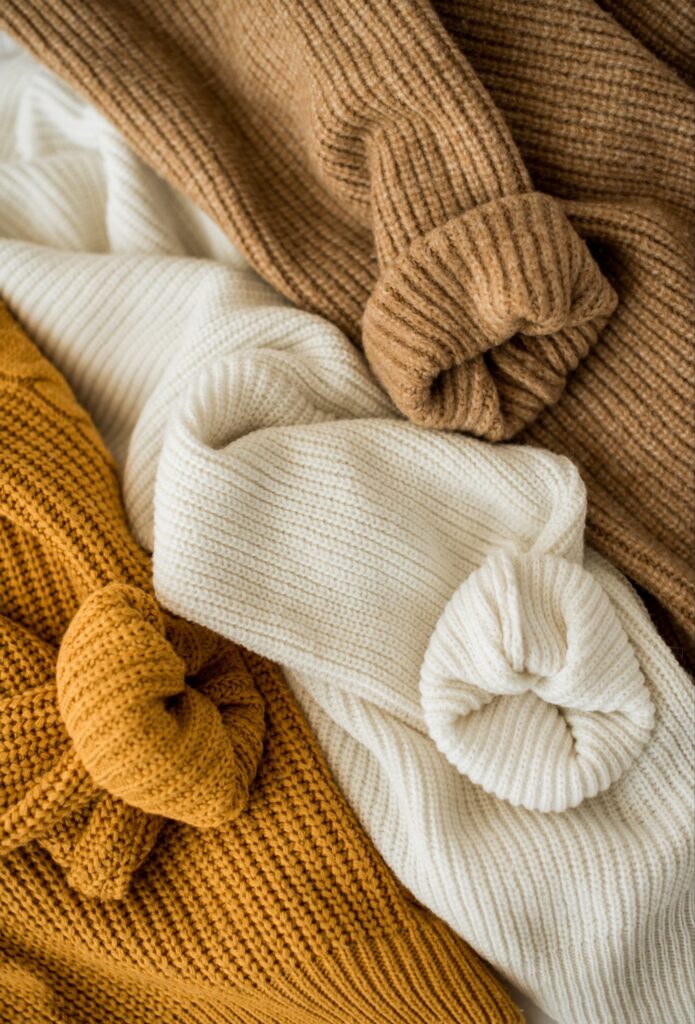
Not all yarns behave the same way. Wool has bounce and memory, cotton tends to drape and grow, and linen softens with wear.
If the pattern calls for a yarn with stretch and you swap it for something without (like cotton or bamboo), your project might turn out slouchier or more rigid than expected.
Think about how you want your finished piece to look and feel, and pick fibers that will help get you there.
Weight Isn’t Everything
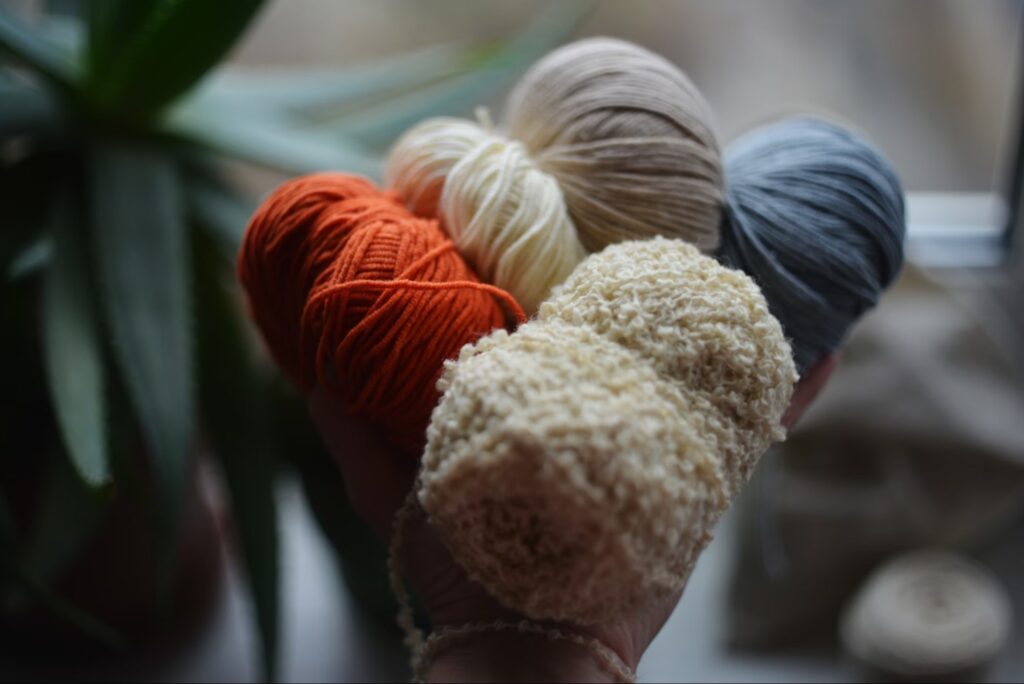
Two yarns labeled “DK” can behave very differently. Some are plump and round, while others are thin and airy.
The only way to know how a yarn will behave in a pattern is to swatch it.
Don’t rely on the label alone—your gauge swatch will tell you what’s really going on.
Hold Two Yarns Together
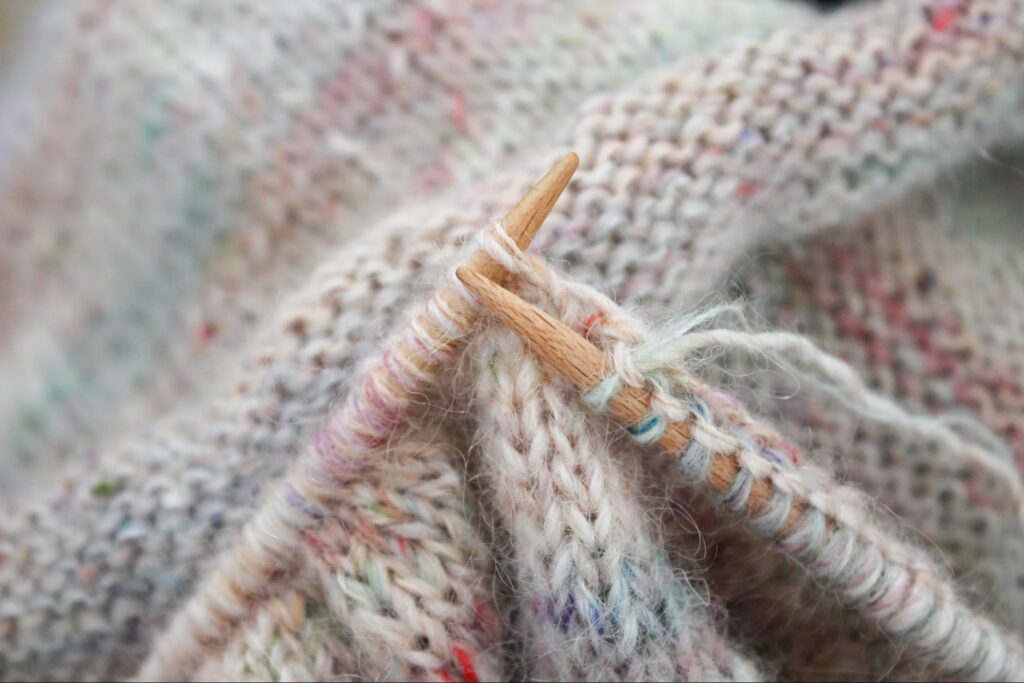
If you’re trying to hit a heavier gauge but only have finer yarns on hand, try holding two strands together.
Fingering weight + fingering weight often equals DK. Or pair a fingering with a laceweight mohair or silk for added texture, softness, or even a little halo.
Just be sure to swatch—this combo can surprise you in the best way.
Consider Structure & Stitch Definition
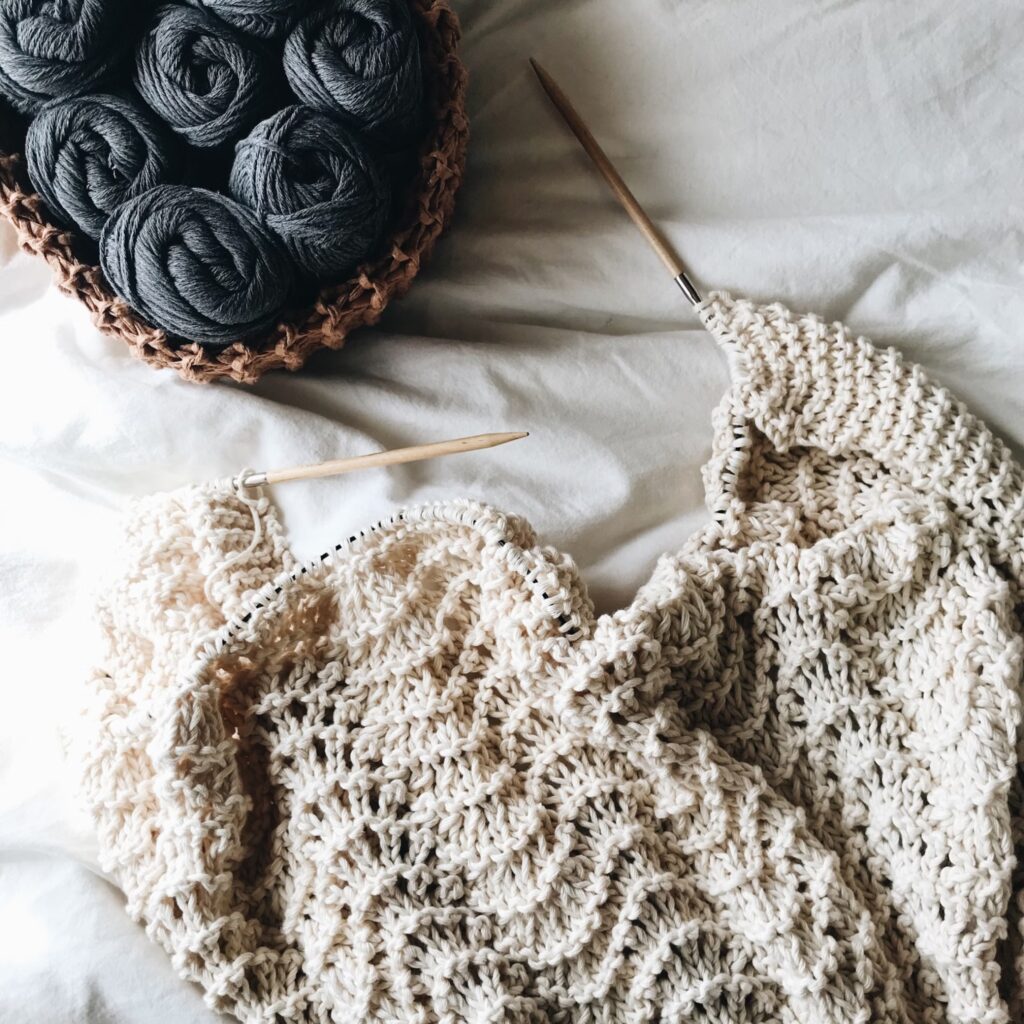
If your pattern has cables, lace, or textured stitches, the yarn you choose can make or break the look.
A round, tightly spun yarn will give crisp definition, while a fuzzy or loosely spun yarn will blur the details.
This doesn’t mean one is better than the other—it just depends on the effect you want.
Don’t Stress About Being Exact
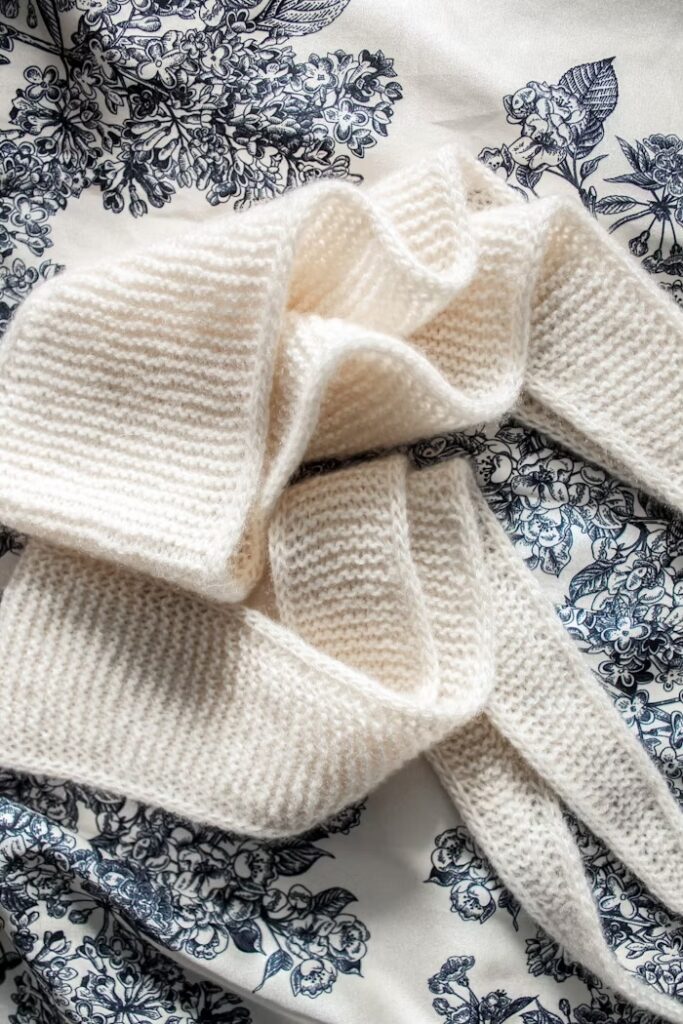
Sometimes you don’t have to match gauge exactly—especially for things like scarves, shawls, and wraps.
These are great projects to try out yarns you’re unsure about or get creative with textures and fiber blends.
Use the pattern as a guide, and let the yarn inspire you.
Think About Drape
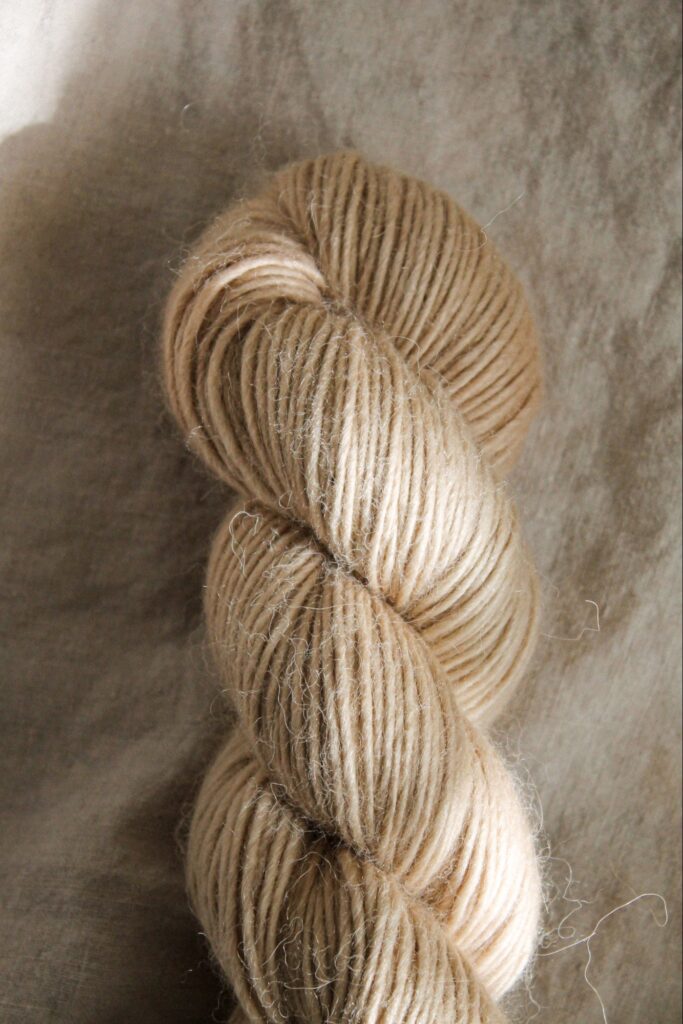
If your pattern has a lot of positive ease or flowy details, a yarn with good drape will help you get that movement.
Fibers like linen, silk, and bamboo tend to drape beautifully, while wool and cotton can feel stiffer or hold their shape more firmly.
If you want a sweater that hangs and moves, pick a yarn that’s up for the job.
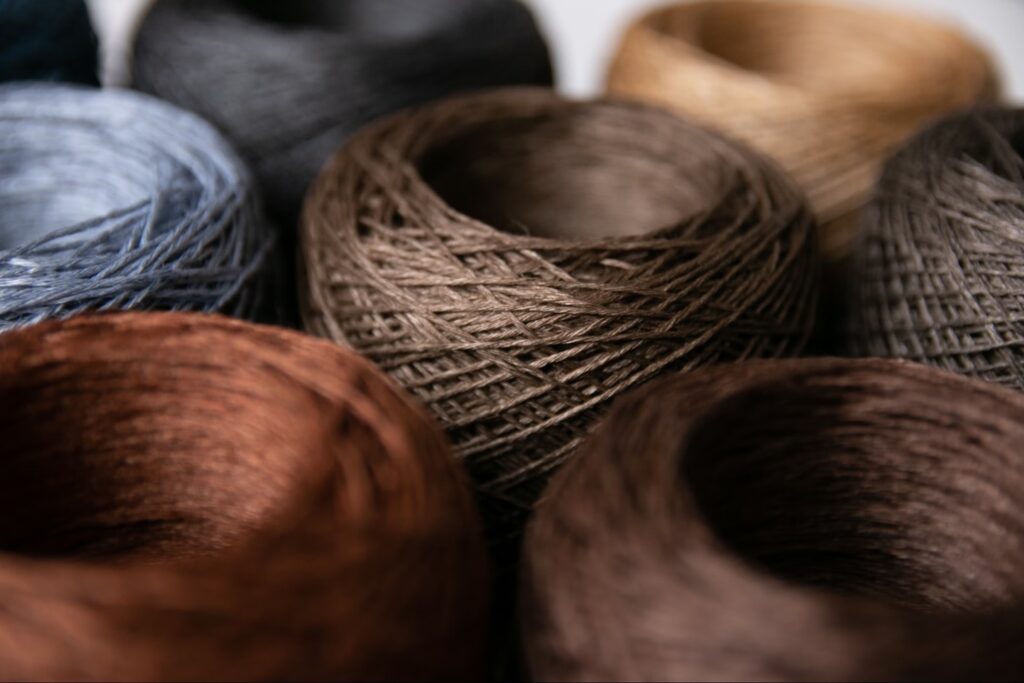
Yardage, Not Just Skein Count
Always check the total yardage required—not just the number of skeins.
Yarn weights can vary wildly between brands, so the number of skeins might not line up.
Look at the pattern’s total yardage needed, then compare it to your chosen yarn’s yardage per skein to make sure you’re buying enough.
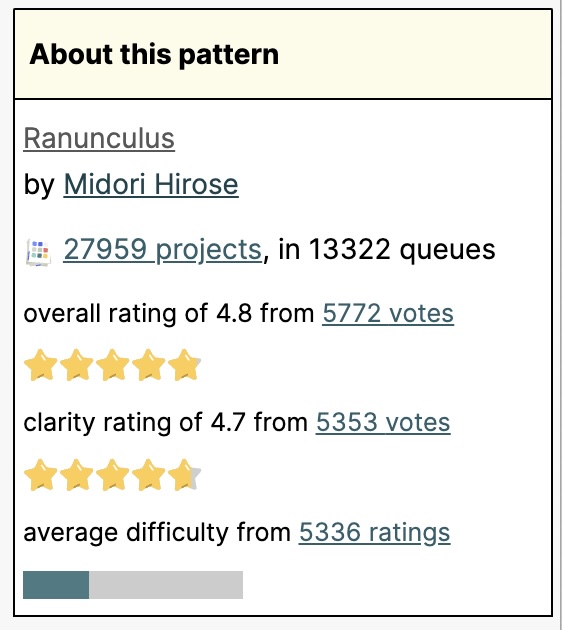
Use Project Pages on Ravelry
Sometimes the best yarn substitution advice comes from other knitters.
If a pattern is popular, chances are someone has already used the yarn you’re considering.
Filter by yarn or search by project tags to see what substitutions people have used, what they loved (or didn’t), and how the finished piece looks.
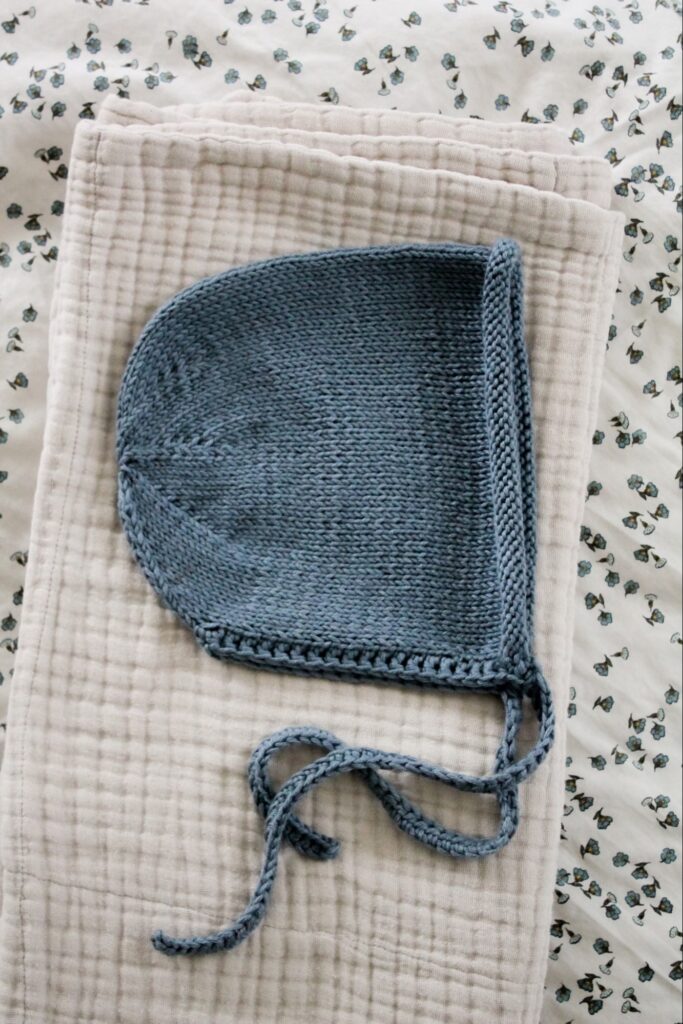
Be Honest About the Final Use
Substituting yarn can open up a lot of creative freedom—but it’s also okay to ask yourself: is this going to be worn, washed, or gifted?
If it’s for a baby or someone who won’t hand wash, choose a yarn that’s soft and easy to care for.
Subbing a non-superwash wool for a superwash wool might give you a prettier finish, but not if it accidentally ends up in the dryer.
Substitution in Action
Once you’ve got the basics down, the real fun begins—trying it out for yourself.
Below are a few real-world examples that show how yarn substitution can completely shift a pattern’s feel, fit, or season.
Some swaps are about fiber content, others are about gauge or drape, and some are about practicality.
Each one is a reminder that a pattern is just the starting point.
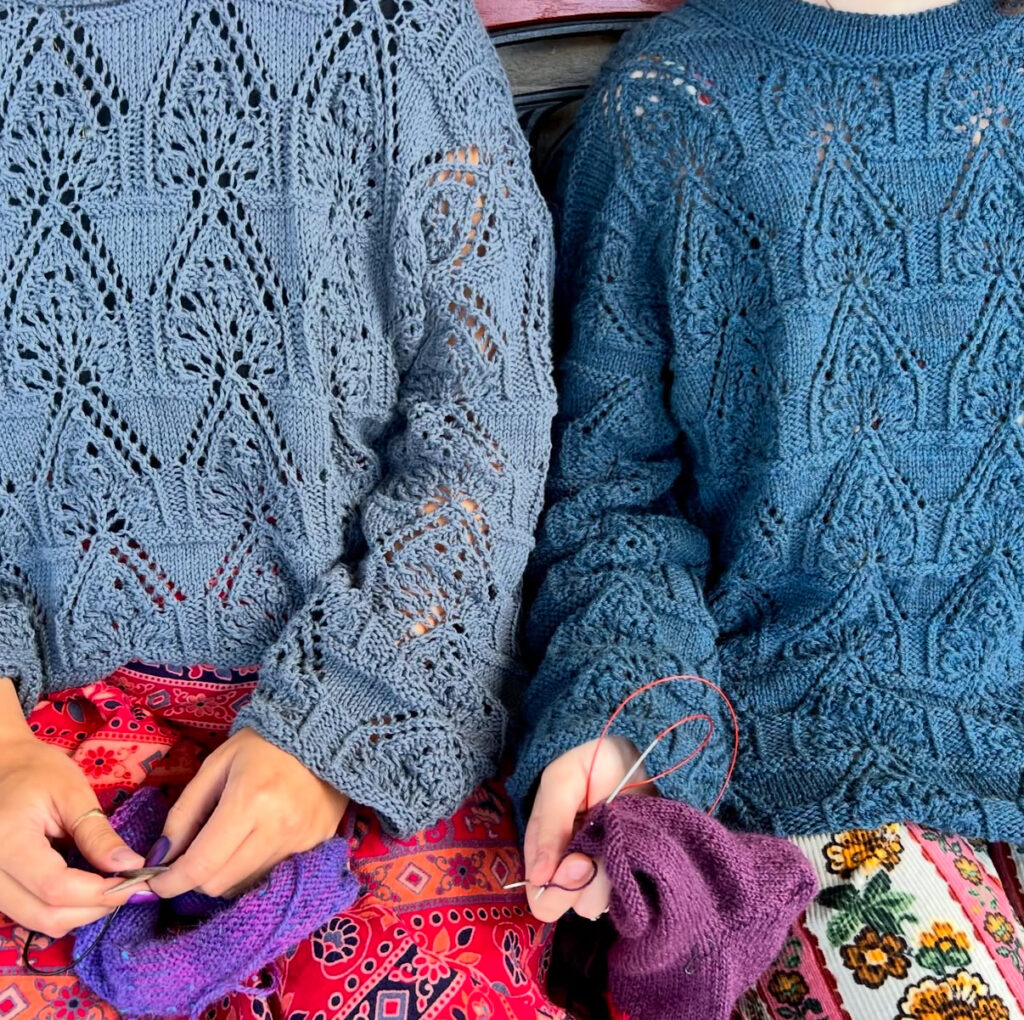
Madeleine Sweater by Pernille Larsen
The original pattern calls for two fingering weight yarns held together to make a worsted weight fabric—but Caitlin swapped in Sandnes Garn Line for a single-strand, plant-based option.
Here you can see it side by side with Sophie’s woolier version in Rosa Pomar Vovo.
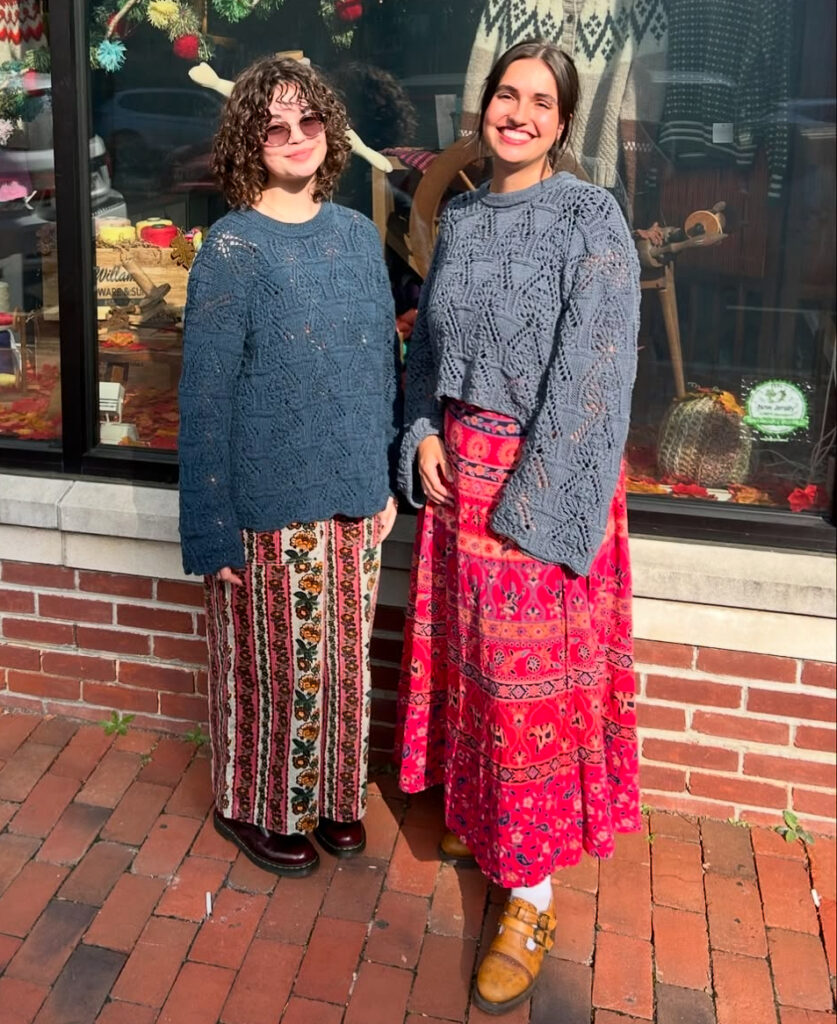
It lightens up the whole look and feel of the sweater, making it perfect for warmer weather.
She also cropped the hem for an even breezier fit.
A great reminder that you don’t always need to match fiber content to match the vibe.
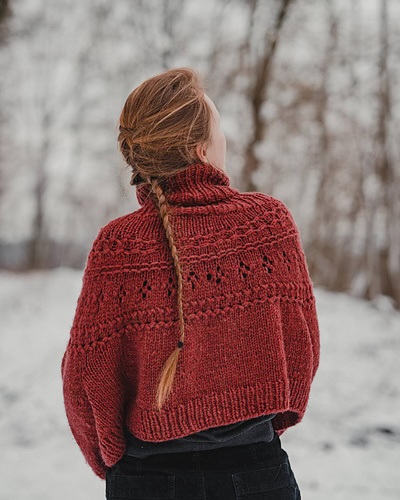
Ranunculus by Midori Hirose
If there’s one pattern that’s made for experimenting, it’s this one.
The pattern is written to be flexible with gauge and yarn choice, and with over 27,000 projects on Ravelry, there’s no shortage of inspiration.
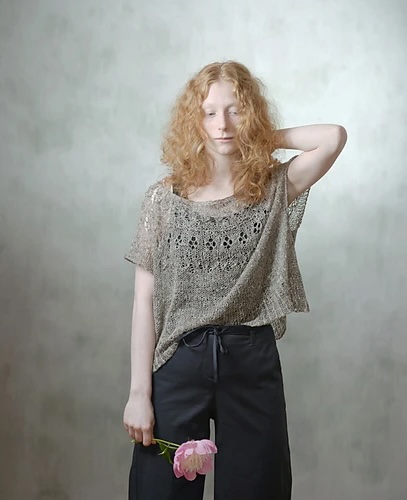
We love seeing this knit up in summer-friendly fibers like Mandarin Petit, Tynn Line, or even Line at a loose gauge for something super open and airy.
It’s a fun way to take a cozy favorite and make it warm-weather-ready.

Florence Tank by Sari Nordlund
This tank calls for two strands of luxe silk yarn, which would be dreamy—but also a little spendy.
Want a more practical version? Try Kelbourne Woolens Skipper, a 100% cotton sport-weight yarn.
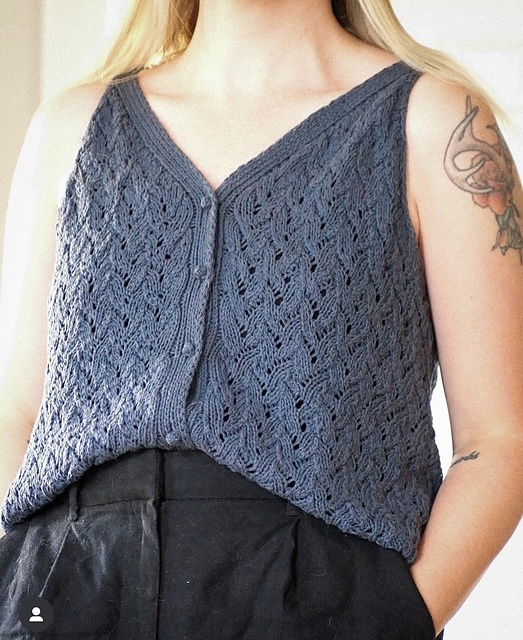
It’s soft, breathable, and machine-washable, so it holds up beautifully to daily wear.
Bonus: it still gives great stitch definition for that all-over beautiful texture.
There’s no one-size-fits-all when it comes to yarn.
Substituting gives you the freedom to customize a pattern to your wardrobe, your budget, or even just your mood.
It can take a little trial and error, but once you’ve done it a few times, it becomes second nature. And if you need a second opinion, we’re just a studio visit away.