If you’ve ever finished a sweater and thought, “I love this, but I wish it fit just a little differently,” chances are ease had something to do with it.
Ease is one of those knitting ideas that comes up all the time, but it isn’t always explained in a way that feels useful.
It can sound technical or intimidating, when really it’s just about how a garment is meant to sit on your body — loose, fitted, relaxed, structured, or somewhere in between.
This month, we’re slowing down and talking through ease in a way that actually makes sense.
We’ll look at how designers use it, how it shows up in real projects, and how a few small choices can completely change the look and feel of a sweater.
No pressure to do it “right” — just more tools to help you knit something you’re excited to wear.
What “Ease” Actually Means
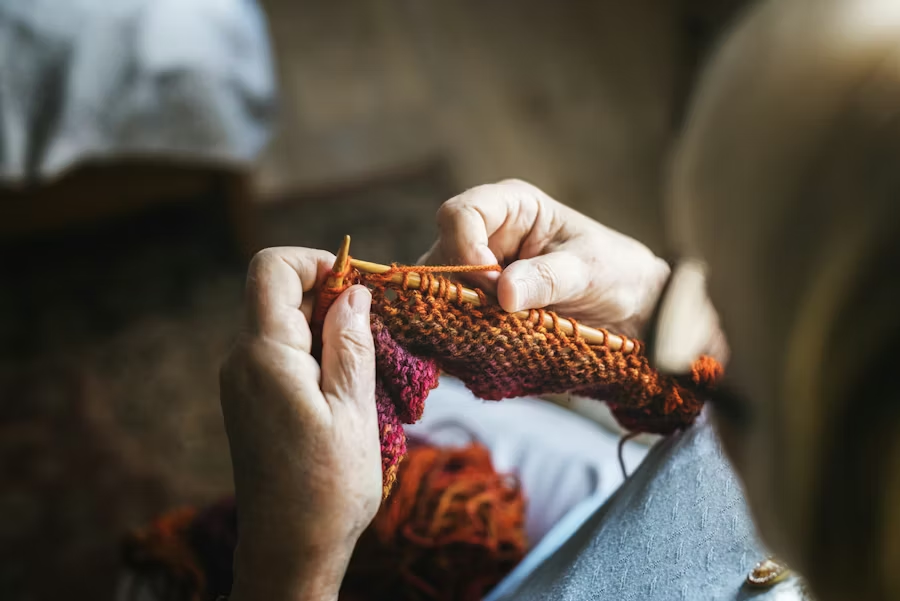
Ease is simply the difference between your body measurements and the finished measurements of a garment. That’s it.
It’s not a special trick or an advanced concept — it’s just math plus intention.
Positive ease means the sweater is bigger than your body. Negative ease means it’s smaller and stretches to fit. Zero ease sits right at your measurements.
None of these are “better” than the others — they just create different looks and feels.
Once you start thinking about ease as a choice instead of a rule, sizing gets a lot less stressful.
Choosing a Size (Without Overthinking It)
Start with your actual body measurements — not the size you usually knit, and not the size you wear in store-bought clothes.
Then look at the finished measurements listed in the pattern and decide how you want the sweater to fit.
Ask yourself a few simple questions:
- Do I want this close to the body or roomy?
- Am I layering underneath?
- Do I want drape or structure?
Picking a size based on how you want the finished piece to feel often makes more sense than picking a size based on habit.
How Designers Use Ease
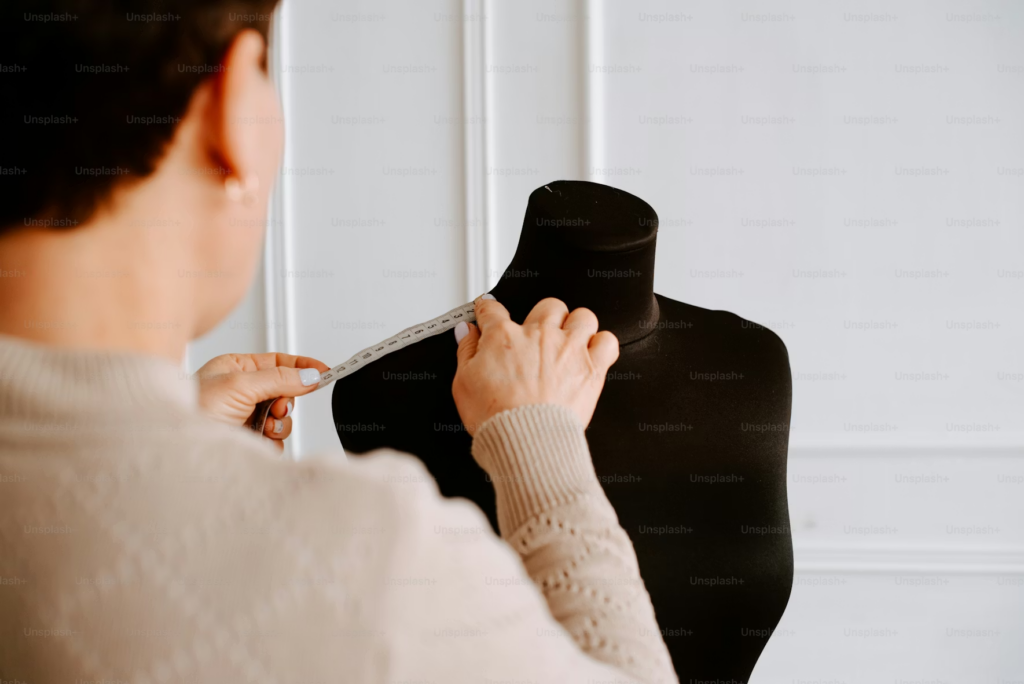
Designers build ease into patterns on purpose. It affects drape, structure, and how a garment moves when you wear it.
A boxy pullover, a slouchy yoke, a fitted tee — all of that comes down to ease choices.
Some patterns clearly spell out the intended ease. Others leave more room to play.
That flexibility is where things get interesting, especially when yarn choice or gauge shifts the final fabric.
The same pattern can look relaxed, tailored, oversized, or sleek depending on how much ease you give it.
Common Ease Myths
One of the biggest myths is that you have to follow the designer’s suggested ease exactly. You don’t. It’s a guideline, not a rule.
Another common one: more ease always means more comfort. Sometimes a sweater with less ease actually feels better because it stays put and doesn’t pull in odd places.
And finally — ease is not a measure of skill. A sweater with negative ease isn’t “harder,” and a roomy one isn’t “easier.” They’re just different choices.
A Great Example: Ranunculus
The Ranunculus by Midori Hirose is a favorite for a reason — it shows how flexible ease can be in real life.
Knit at different gauges, with different yarns, and sized with different intentions, it turns into completely different garments.
A chunky, cropped version with lots of positive ease feels cozy and bold. Knit in a drapey yarn at a finer gauge, it becomes light and fluid. Worked close to the body, it reads almost like a tee.
Same pattern. Same basic construction. Totally different results — all because of ease.
Positive Ease
Cozy, Chunky, and Intentional
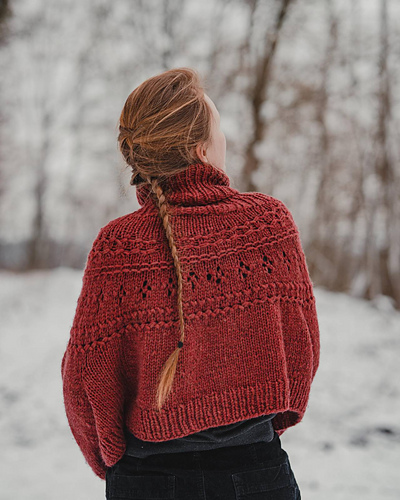
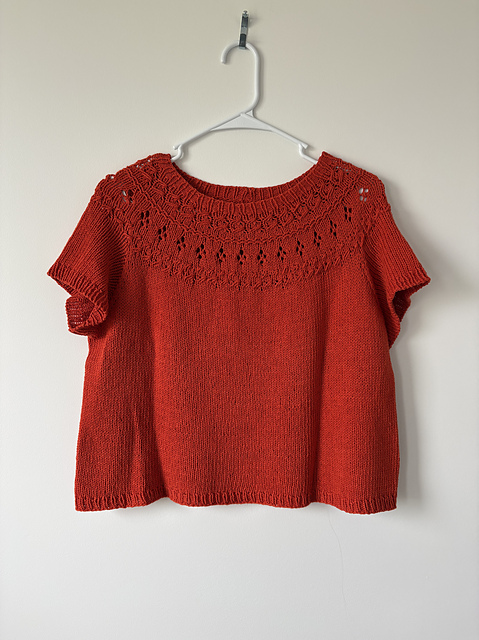
The chunky, cropped version knit by GALADknits leans fully into positive ease.
The fabric is thick, the shape is boxy, and the sweater sits away from the body in a way that feels bold and relaxed.
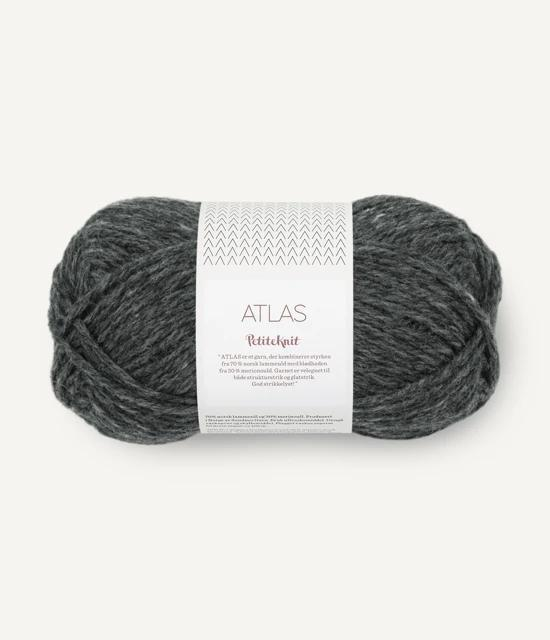
This look could be recreated beautifully with Sandnes Garn Atlas.
Atlas has the structure and loft to hold those proportions without collapsing, and it really supports that oversized silhouette.
In this version, the ease isn’t accidental — it’s the whole point. The sweater feels cozy, architectural, and very much like an outer layer.
Moderate Ease
Relaxed and Wearable
The versions knit by kayakeri20 and sarilinn, both using Sandnes Garn Line, land somewhere in the middle.
The fabric is lighter, the drape is softer, and the ease feels relaxed without being oversized.
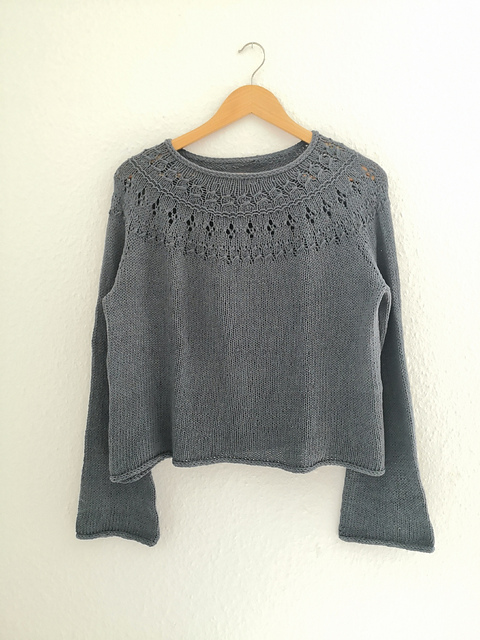
Even though these two sweaters use the same yarn, they still read differently — sleeve length, body length, and personal sizing choices all play a role.
This is a great reminder that ease isn’t just about yarn weight; it’s also about how much room you build into the garment and where.
These versions feel easy to throw on, comfortable to wear all day, and very adaptable across seasons.
Little to No Ease
Close-Fitting and Clean
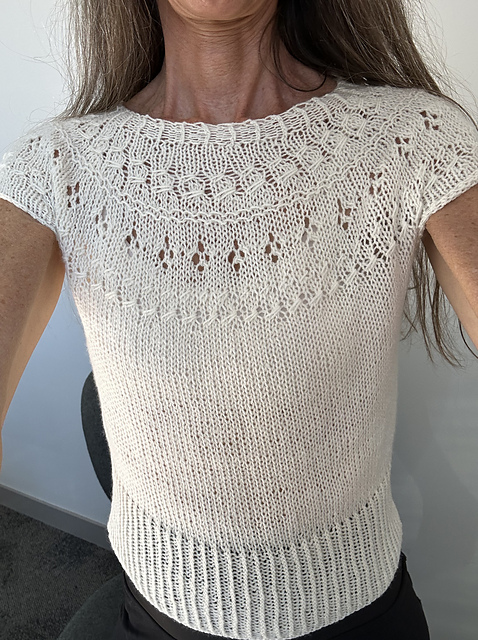
Then there’s Laetitia48’s version, knit with Sandnes Garn Sunday, which was knit to hug the body much more closely.
This one appears to have very little ease — possibly even negative ease — and the effect is a sleek, fitted sweater that feels more like a lightweight top than a cozy layer.
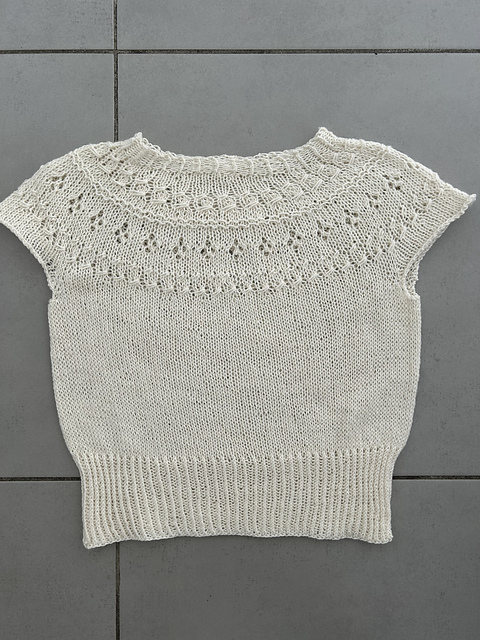
Sunday’s smooth structure and lighter weight really shine here.
With less fabric between the stitches and the body, every detail of the yoke stands out.
This version shows how ease can completely shift the personality of a sweater, even when the pattern stays the same.
Same Pattern, Different Decisions
Looking at these Ranunculus sweaters side by side makes one thing very clear: ease isn’t a fixed number. It’s a choice.
Yarn weight, fiber, gauge, and size selection all work together to determine how a sweater fits and how it feels when you wear it. Ranunculus just happens to be an especially good canvas for seeing those choices in action.
If you’ve ever wondered why two knitters can make the same pattern and end up with sweaters that look nothing alike — this is why.
Ease is one of those things that can feel confusing until you see it in action — and then suddenly it clicks.
Once you start paying attention to how yarn choice, gauge, and sizing work together, patterns feel a lot more flexible and a lot less intimidating.
If you’ve been holding off on a project because you weren’t sure how it would fit, we hope this gives you a little more confidence to trust your instincts, try something new, and make choices that feel right for you.
And if you want to talk it through in person, we’re always happy to look at patterns, yarn, and sizing together at the shop.