
Seaming tends to get a bad rap—too fussy, too slow, too much room for error. But in summer? It can be a total game-changer.
Knitting in smaller, flat pieces means less fabric in your lap, easier travel, and way less trapped heat.
This month, we’re breaking down everything you need to know about seaming—from choosing the right technique for your project to getting that clean, professional-looking finish.
We’ve got tips, tricks, a few favorite patterns that make the most of seams, and yarn pairings to get you started.
Why Seam?
Seams add structure. They help garments keep their shape, especially in areas like shoulders and sides that take on the most wear.
A seamed sweater is less likely to stretch out over time—and if you’re working with drapey yarns, seams can help anchor the fabric so it doesn’t droop.
In summer, seaming also means knitting in flat pieces—easier to carry, cooler to hold, and much more travel-friendly than a giant sweater in your lap.
Choosing the Right Seam
Not all seams are created equal—different techniques serve different purposes depending on what you’re making, where the join is, and how much stretch or structure you need.
- Mattress Stitch
Great for vertical seams in stockinette. It’s nearly invisible on the right side and creates a strong, flexible join—perfect for sweater sides or set-in sleeves. - Horizontal Seaming
For shoulder joins or joining panels top-to-top, you can use a modified mattress stitch, three-needle bind-off, or even a slip stitch crochet seam, depending on the fabric and look you want. - Whipstitch or Slip Stitch Crochet
Especially useful in crochet projects or for quickly joining textured knits. Simple to execute and easy to adjust as you go.
Choosing the right seam is less about rules and more about what works best for your project—do you want stretch? Structure? Something invisible? Each of these methods has its strengths, and once you know the basics, it’s easy to mix and match.
Quick How-To: Common Seaming Methods
Mattress Stitch
(Vertical Seam in Stockinette)
- Lay both pieces flat with right sides facing up.
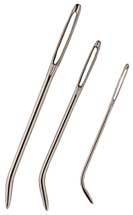
- Thread a blunt tapestry needle with yarn.
- Insert needle under the bar between the first & second stitch on one side, then do the same on the opposite side.
- Repeat, alternating sides. Pull gently every few stitches to close the seam.
Horizontal Seam
(Shoulder or Top Edges)
- Lay pieces flat with right sides facing up.
- Use a tapestry needle to work through the top loops of the bind-off edges—usually one stitch in from the edge.
- Alternate sides, working stitch-for-stitch and keeping tension even.
- A light steam after seaming can help the join relax and blend in.
Whipstitch
(Simple Seam for Knits or Crochet)
- Align edges with right sides facing in or out, depending on finish.
- Sew through both edges from back to front in a spiral motion.
- Repeat evenly along the seam. Keep tension light but snug.
Slip Stitch Crochet Seam
- Place pieces together with right sides facing out.
- Insert a crochet hook through both edges, yarn over, and pull through.
- Continue slip stitching across the seam.
- Adds a decorative ridge—great for visible joins or sturdier seams.
Tips for Better Seaming
- Use a blunt tapestry needle for control without splitting stitches.
- Work on a flat surface so your seams stay even and untwisted.
- Pin or clip pieces together before you start—no guesswork, no bunching.
- Match rows, not just inches. Seaming works best when your pieces are aligned stitch-for-stitch or row-for-row.
- Don’t pull too tight. Your seam should be secure but still flexible—especially in garments with drape.
Pattern Picks That Embrace the Seam
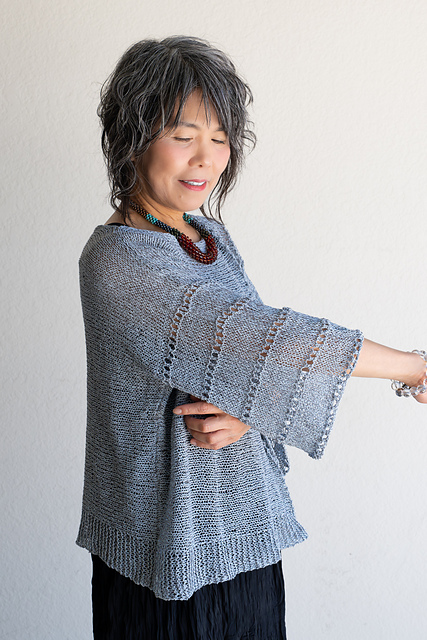
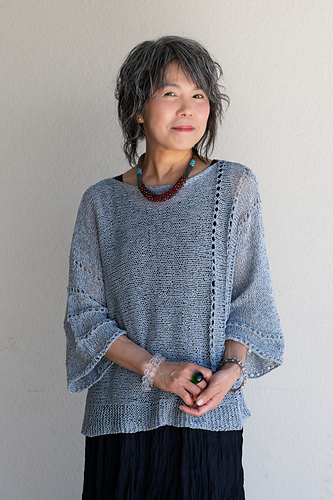
Pearls by Yumiko Alexander
This relaxed pullover blends stockinette with asymmetrical eyelet detailing for an easygoing but elegant finish.
Front and back are worked flat and seamed together—ideal for summer knitting in small, portable panels.
Sandnes Garn Alpakka Silke
Light, drapey, and buttery soft—this blend of baby alpaca and silk is breathable but luxe.
The slight sheen makes eyelets glow, and the structure of seams helps keep it all balanced.
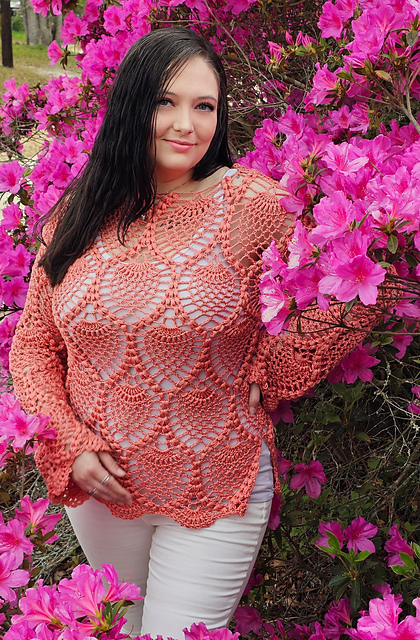
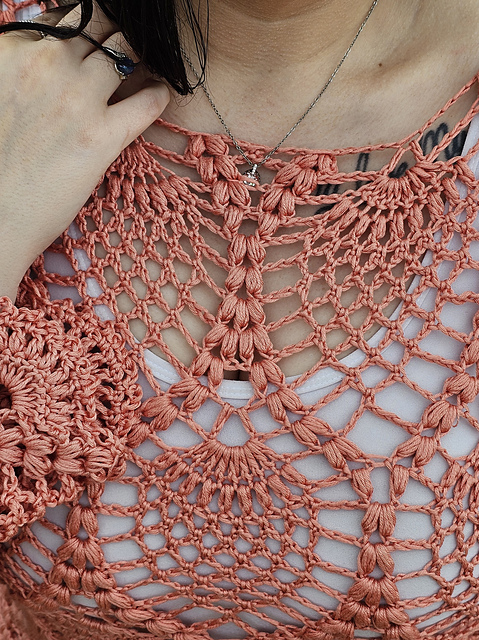
Romance Top by Anastasia R Smith (Crochet)
This lacy crochet top uses light seaming to bring two identical panels together before building out the body.
A modern take on the pineapple stitch gives it beautiful texture and movement—without making it too heavy for hot days.
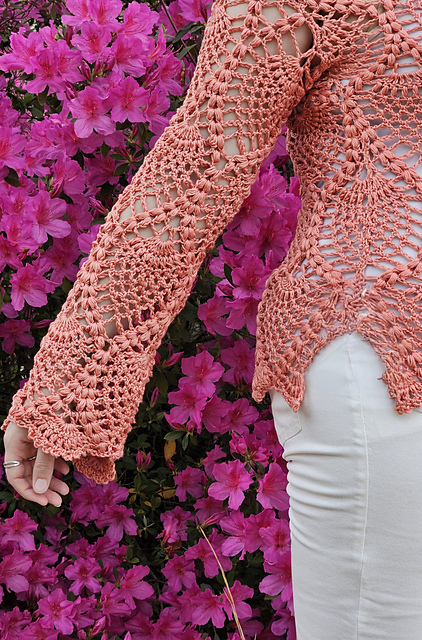
Sandnes Garn Line
Line’s cotton-linen blend gives just the right weight and drape for lace, and it’s sturdy enough to hold structure in crochet without stretching out.
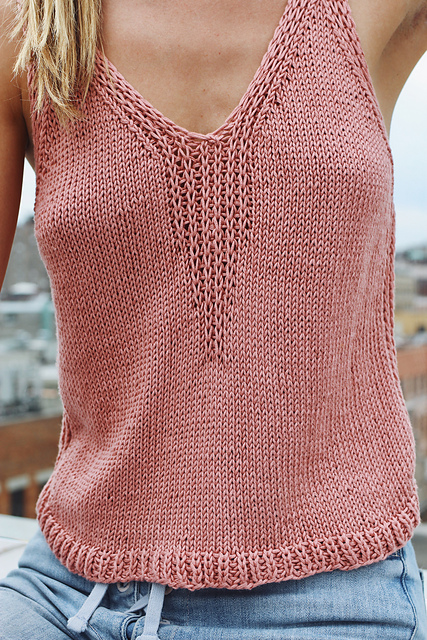
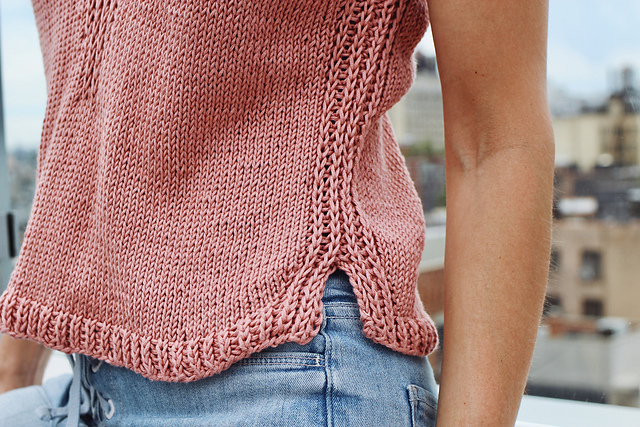
Streamline Tank by Alexandra Tavel
A breezy, architectural tank with clean lines and an effortless fit.
It’s a great intro to seamed summer garments—knit flat and pieced together for structure without bulk.
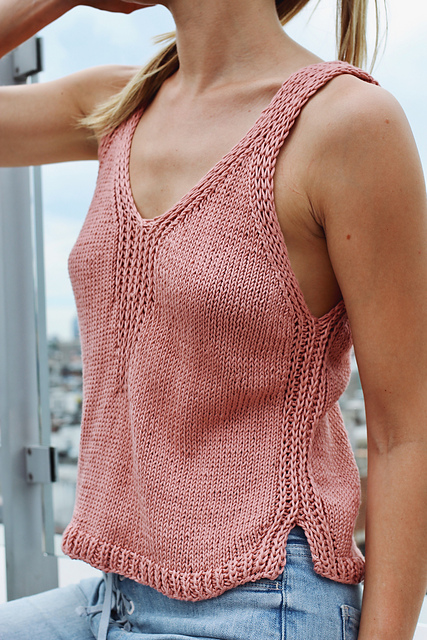
Kelbourne Woolens Skipper
This sport-weight cotton is smooth, cool, and holds stitch definition beautifully.
Skipper has just enough bounce to make seaming feel satisfying and sturdy, without adding warmth.
Seaming doesn’t have to be scary—or tedious.
With the right method, a little planning, and a relaxed mindset, it can actually be satisfying. It’s the step that turns a pile of pieces into something finished and wearable.
And once you get the hang of it? You might even find yourself looking forward to that last stitch.