
Picking colors might be one of the most exciting (and sometimes intimidating) parts of starting a project. This month, we’re digging into a few of our favorite ways to play with color—no fancy charts, no stress, just fun.
We’re talking stripes, gradients, marling… all the good stuff that makes you pause mid-knit to admire what’s happening on your needles.
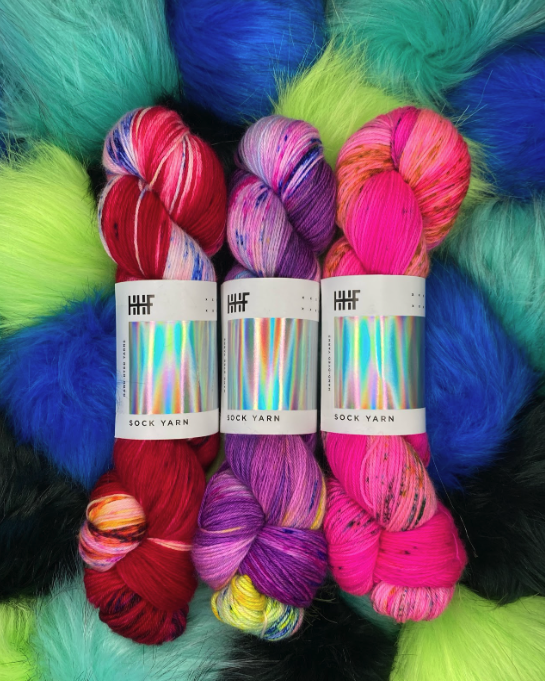
These techniques aren’t just eye-catching—they’re also approachable, flexible, and a great way to stretch your skills without feeling overwhelmed.
Maybe you’ve knit a few stripes before but want to try jogless transitions, or you’ve always been curious about fades and don’t know where to begin. That’s what we’re here for.
This newsletter is packed with tips, tricks, and pattern ideas to help you get inspired and get going. So grab your favorite color combo, and let’s make something that turns heads—and teaches you something new in the process.
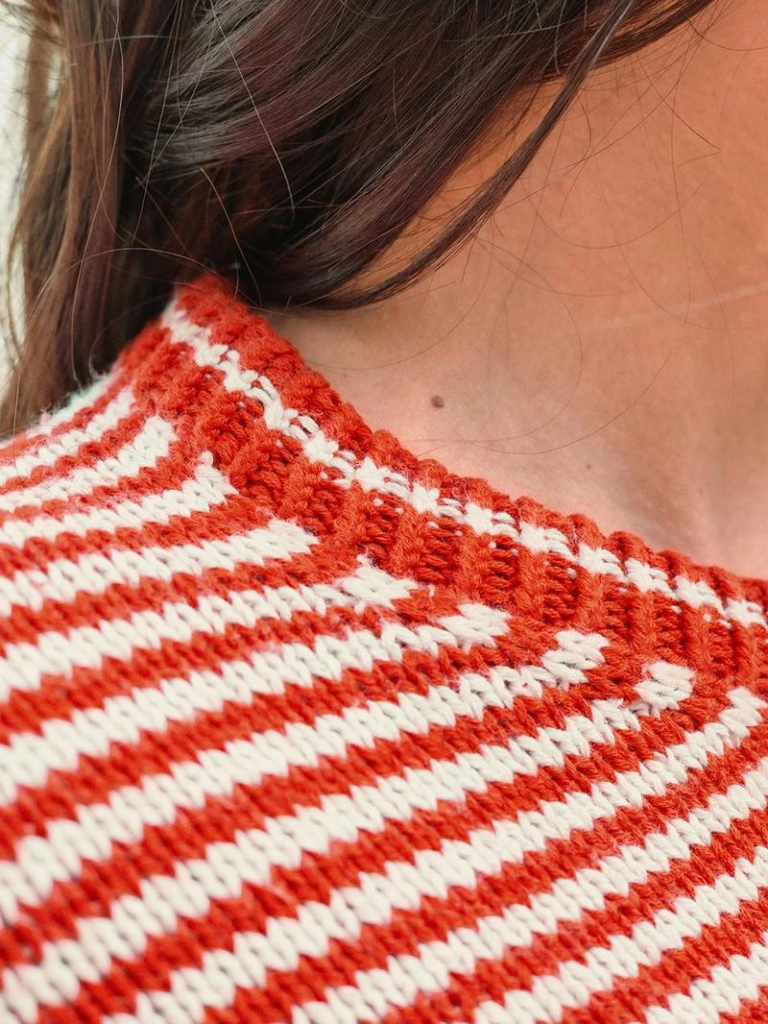
Stripes: Bold, Subtle, or Somewhere In Between
Stripes are probably the easiest way to play with color, but they don’t have to feel predictable. There’s a lot of fun to be had in how you arrange them—thin or thick, uniform or random, bold contrast or gentle tone shifts.
Tips & Tricks for Great Stripes:
Spacing Matters
Even-width stripes feel rhythmic and structured.
Random-width stripes give a more organic, modern look.
Both can be beautiful—it just depends on the vibe you want.
Carry Your Yarn Up the Side
If you’re only using two colors and not cutting your yarn every few rows, you can carry the unused strand up the side of your work to avoid weaving in tons of ends.
Just be sure to keep it tidy so it doesn’t tug.
Jogless Stripes in the Round
When knitting stripes in the round, you’ll notice that the beginning of your round creates a step or “jog” between colors.
You can fix that with a super simple trick: after knitting the first round of a new color, slip the first stitch of the next round purlwise.
That shift helps the stripes line up more cleanly.
Mixing Yarn Types
Don’t be afraid to mix textures—a strand of mohair with wool, or silk with cotton, can give your stripes depth without a big contrast in color.
Stripes are also a great way to bust stash or use up leftovers. Don’t worry too much about matching everything perfectly. Some of the best stripe projects are the ones where you just let loose.
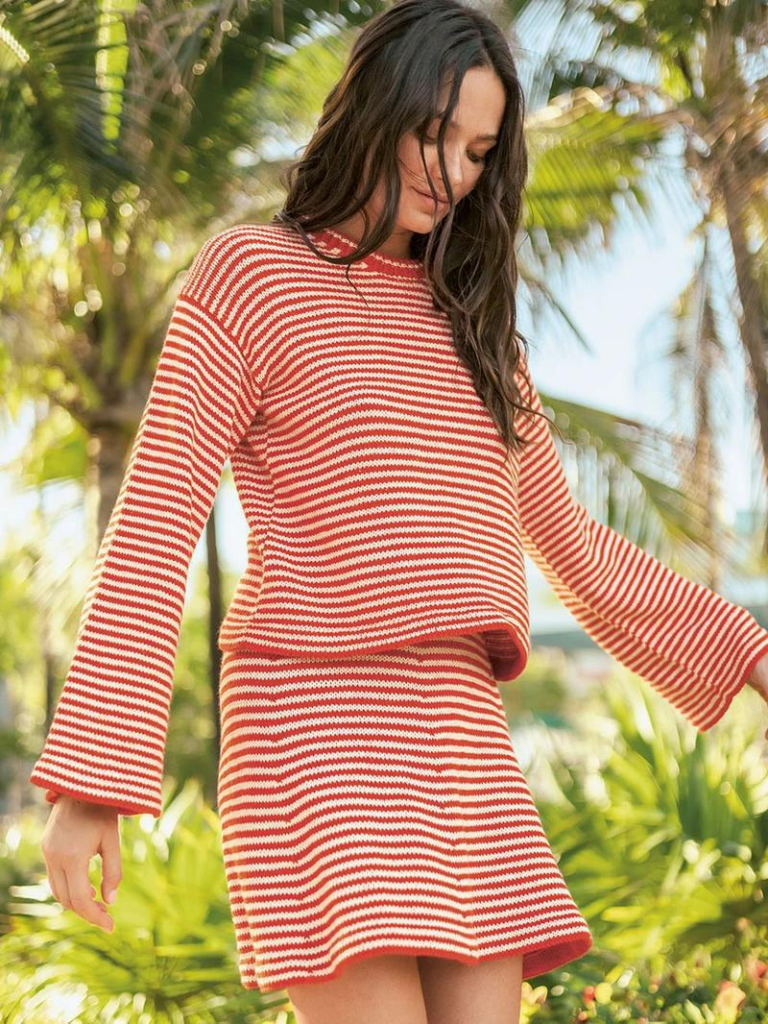
Pattern Spotlight: Cleo Sweater and Skirt by Sandnes Garn
The Cleo set is the perfect showcase for stripe play.
The sweater features wide bands of color that are just structured enough to feel polished, but still leave room for creativity if you want to swap in your own palette or stripe order.
The matching skirt gives you the chance to repeat or contrast your sweater colors, and the clean silhouette keeps the focus on the stripes themselves.
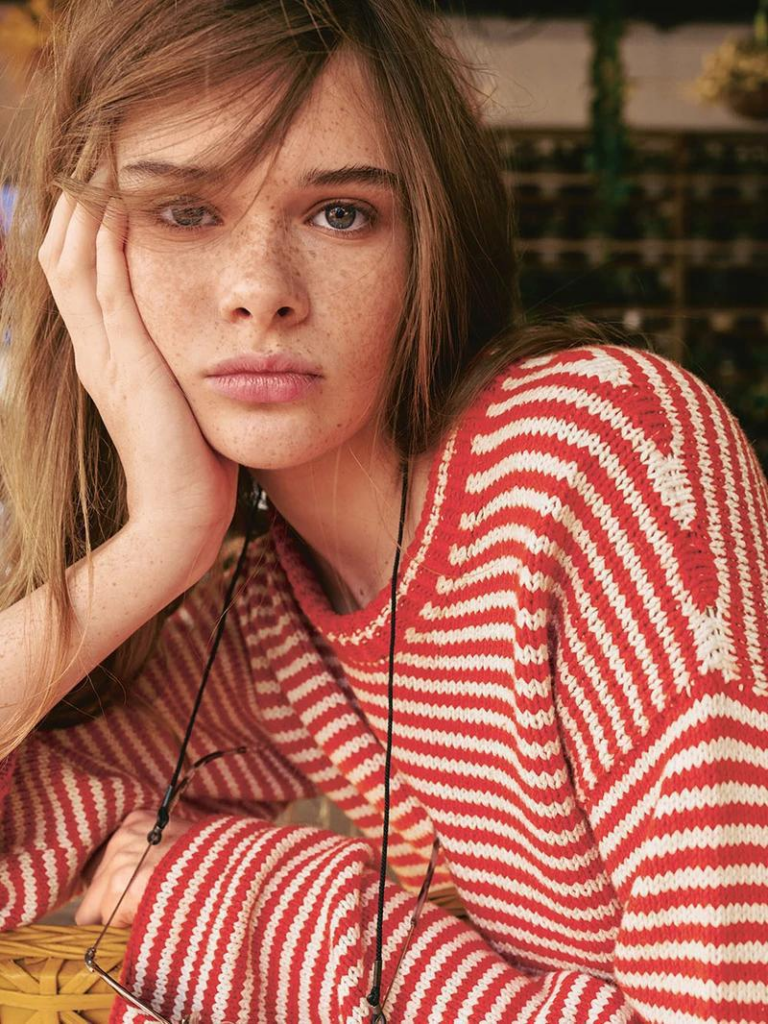
This pattern is especially great if you’re new to striping and want to practice jogless techniques or experiment with how different stripe widths look on the body.
Plus, with simple shaping and construction, you can focus all your energy on having fun with color.
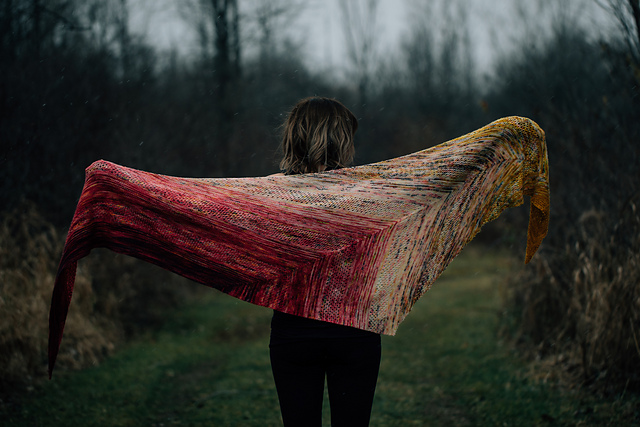
Gradients: Smooth & Satisfying
A gradient is a slow shift from one color to another, often spanning a whole rainbow—or just a few subtle shades. It’s all about flow. Instead of stripes with hard edges, gradients let colors melt into each other.
You can go bold and bright, soft and neutral, or even monochrome. It’s up to you.
Tips & Tricks for Gorgeous Gradients:
The Fade Formula
A great gradient usually includes at least three colors that bridge into each other. Think: pink → peach → yellow.
To smooth the transitions, look for overlap—speckles that share tones, or semi-solids that blend into the next.
Mini Skeins Are Your Friend
Gradient sets are often sold as curated mini skein bundles, but you can also build your own from stash!
Lay your skeins out in a line and squint—do they shift gradually from one to the next?
Then you’re good to go.
Blend Your Transitions
To really soften the handoff from one skein to the next, work a few rows of alternating 2-row stripes before switching fully to the new color.
It’s like dipping your toe in before you jump.
Gradient ≠ Rainbow
A gradient doesn’t need every color—it just needs a sense of movement.
Even a 3-skein gradient in similar shades (sage → olive → forest) can look amazing and modern.
You can also gradient in reverse, starting dark and going light. Or fade to and from a single center color. Once you start playing, the possibilities feel endless.
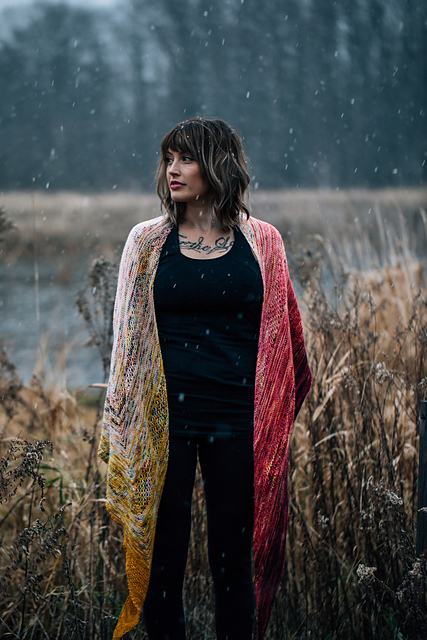
Pattern Spotlight: Find Your Fade by Andrea Mowry
Find Your Fade is practically a rite of passage at this point—and for good reason.
It’s a huge, cozy shawl worked in simple stitches, which makes it the perfect backdrop for gradient play.
You can use a curated fade set or mix up your own combo of speckles, tonals, and solids.
The shape grows from one point out, so you’re never stuck with too many stitches at once—and the whole thing is made up of relaxing garter stitch and some simple lace.
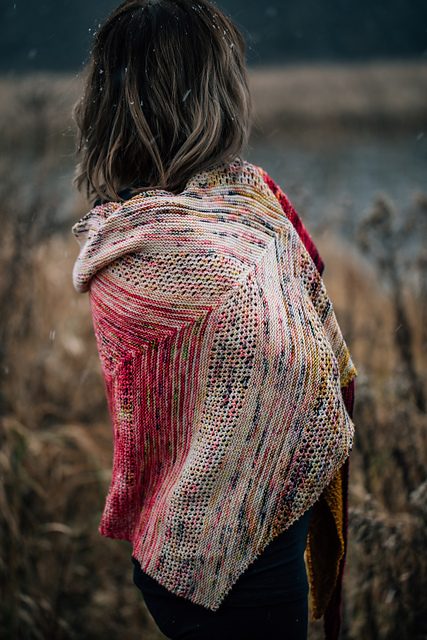
This pattern shines when the colors do.
It’s ideal for showing off skeins you’ve been saving, or combining yarns from different dyers and bases.
If you’ve ever picked up a skein just because you loved the color, this is your excuse to finally use it.
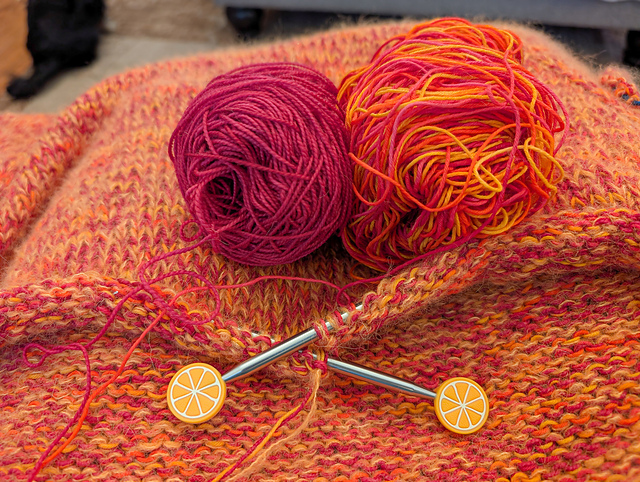
Marling & Ombre: Make It Moody or Magic
Ombre and marling both create a blended, tonal effect—but they get there in different ways.
Ombre is a gradient within a single color family. Think light pink fading into deep magenta, or pale blue shifting into navy. The color transitions are smooth and usually monochromatic.
Marling, on the other hand, is when you hold two or more strands of yarn together to create a tweedy, blended fabric. It’s a perfect way to use up stash yarns or add depth and texture to your project—especially when you’re working with neutrals, tonals, or mohair.
Build Your Ombre by Weight
For a smooth ombre, you’ll need to plan your yarns carefully.
Choose yarns in the same base (or very similar) and line them up from lightest to darkest.
Use Two Strands to Blend
Holding two strands of different colors together is a classic marling trick.
To transition between colors smoothly, drop one strand and add a new one for a few rows, then fully switch.
This “handshake” row helps fade the change.
Play with Texture
Marling adds interest to simple stitches. Try garter, seed stitch, or even plain stockinette to let the fabric shine.
Mohair or Suri Alpaca also works beautifully when paired with a smoother yarn.
Let Loose
Marling doesn’t have to be subtle. You can go bold by combining high contrast strands—or keep it chill with close color matches.
It’s a low-pressure, high-reward technique that’s great for experimentation.
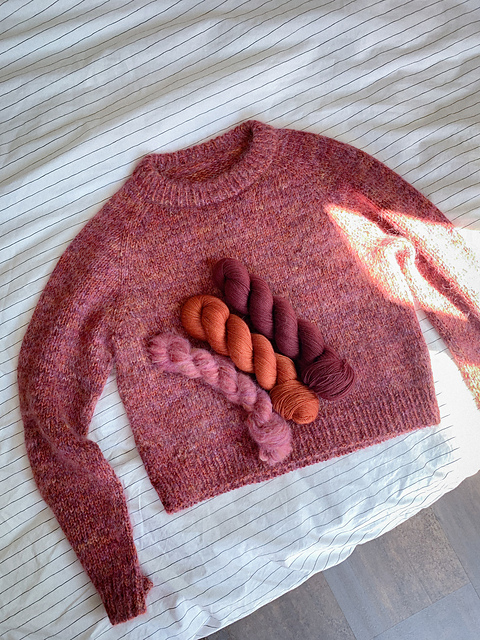
Pattern Spotlight: Doppio Sweater by Seunghee Hong
The Doppio Sweater is a true celebration of marling.
Designed to be knit with three yarns held together, it invites you to mix textures, fibers, and colors.
Mohair with merino? Absolutely.
Speckles, solids, and a dash of sparkle? Go for it.
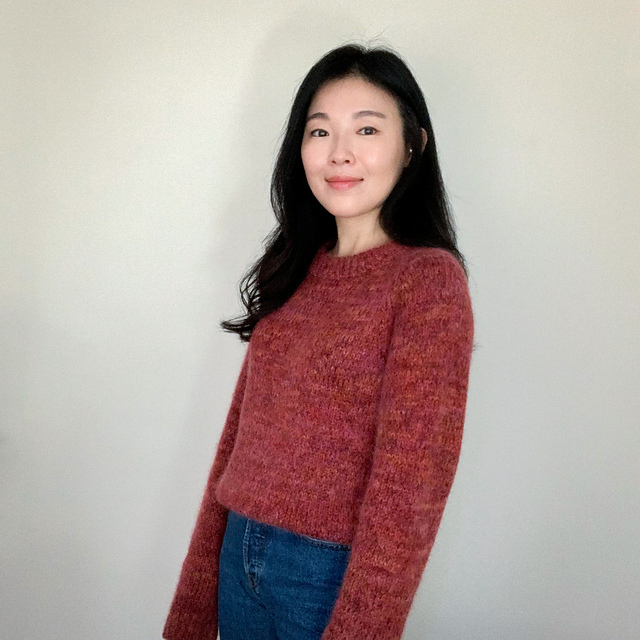
The pattern uses compound raglan construction for a flattering, curved shoulder fit, and it’s knit top-down in the round.
There’s a built-in purl faux seam that gives structure (and is great for color changes), and you can customize the neckline, sleeves, and body length to your liking.
This is a stash-buster’s dream—and a wearable one at that.
The fabric you get is plush, lofty, and totally one-of-a-kind.
Every version we’ve seen feels personal and painterly, like color theory come to life in yarn form.
Color Play Technique: Planning Color Combos
So you want to stripe, fade, marl, or ombré—but how do you actually pick the colors?
It’s easy to feel overwhelmed when you’re standing in front of a wall of yarn.
Here’s how to make choices that feel intentional (but still fun).
Use a Color Wheel—Or Just Squint
The color wheel is a helpful tool, but you don’t need to memorize color theory to make something beautiful.
Start by grouping your yarns by warmth (cool blues, warm reds, etc.) and intensity (soft vs. bold).
Lay them out and squint—if something jumps out too harshly, it might need adjusting.
Try the Twist Test
Take two strands of yarn and twist them together.
This is a quick way to see how the colors will read when marled or striped.
It’s especially helpful if you’re not sure a pairing “goes.”
Don’t Sleep on Neutrals
If you’re feeling stuck, add a neutral—gray, beige, cream, or black—to the mix.
Neutrals help balance the palette and let bright colors pop without feeling chaotic.
Break Up Similar Colors
When planning stripes or fades, put a little contrast between similar shades.
Adding a pop of light between two medium tones can really help each one stand out.
Swatch Small
If you’re unsure, knit a quick swatch using stripes or two strands held double.
Seeing the transition in action helps way more than staring at skeins.
Mood > Rules
Most importantly, go with your gut.
Are you in the mood for beachy pastels, moody jewel tones, or a classic monochrome moment?
Let that guide your picks more than any chart or rule.
Ready to Play With Color?
We hope this gave you a fresh way to think about your yarn stash—and a few sparks of inspiration to try something new.
Stripes, gradients, fades, marls… each one brings its own kind of joy, and there’s no right or wrong way to play with color.
You can start small or go all in. Just have fun with it.
And remember, if you’re ever stuck, need help picking colors, or just want to show off what you’re working on, we’re always here.
Come by the shop or send us a message—we’d love to see what you’re stitching.