
We all know the feeling—you’ve bound off the last stitch, proud of your work, and then those yarn tails are still staring at you.
It’s the step a lot of us put off, but weaving in ends doesn’t have to be the dreaded chore it’s made out to be.
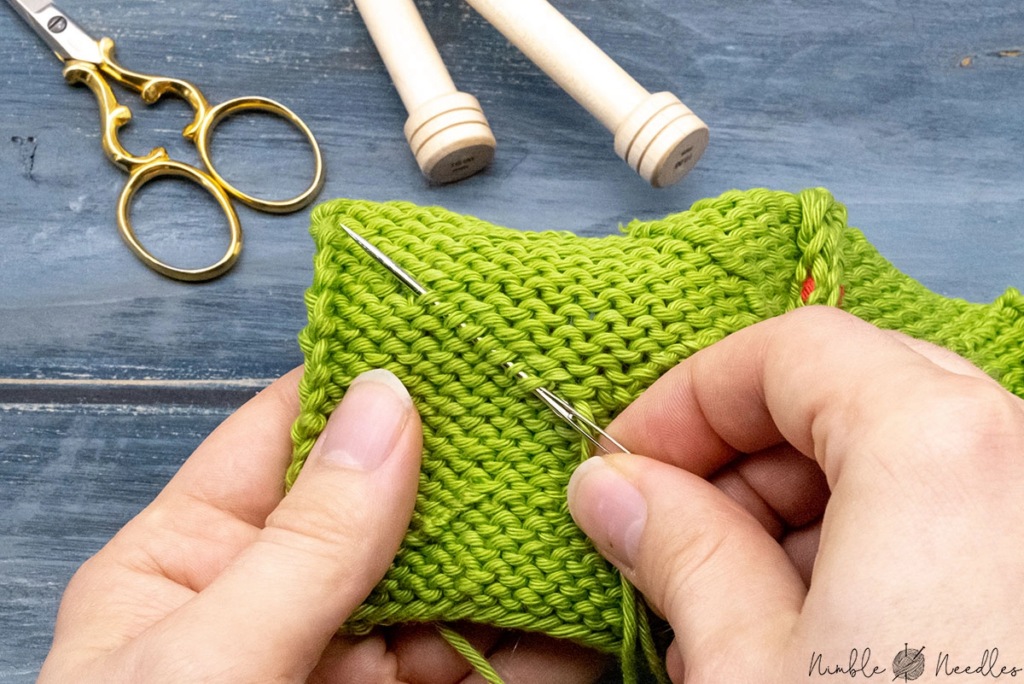
With the right approach, it’s actually pretty satisfying—like giving your project that final polish before it’s truly ready to wear or gift.
This month, we’re sharing our favorite ways to tackle ends so they stay secure, stay invisible, and keep your knits looking neat.
From simple tricks to project-specific strategies, consider this your quick-start guide to finishing with confidence.
Ends are sneaky.
They seem small compared to the sweater, shawl, or hat you just finished, but the way you handle them can change everything—how the piece looks, how it feels, and how long it lasts.
Leave them loose and they can wiggle free. Weave them in the wrong way and they can bunch or show through. But give them the right treatment, and they disappear like they were never there.
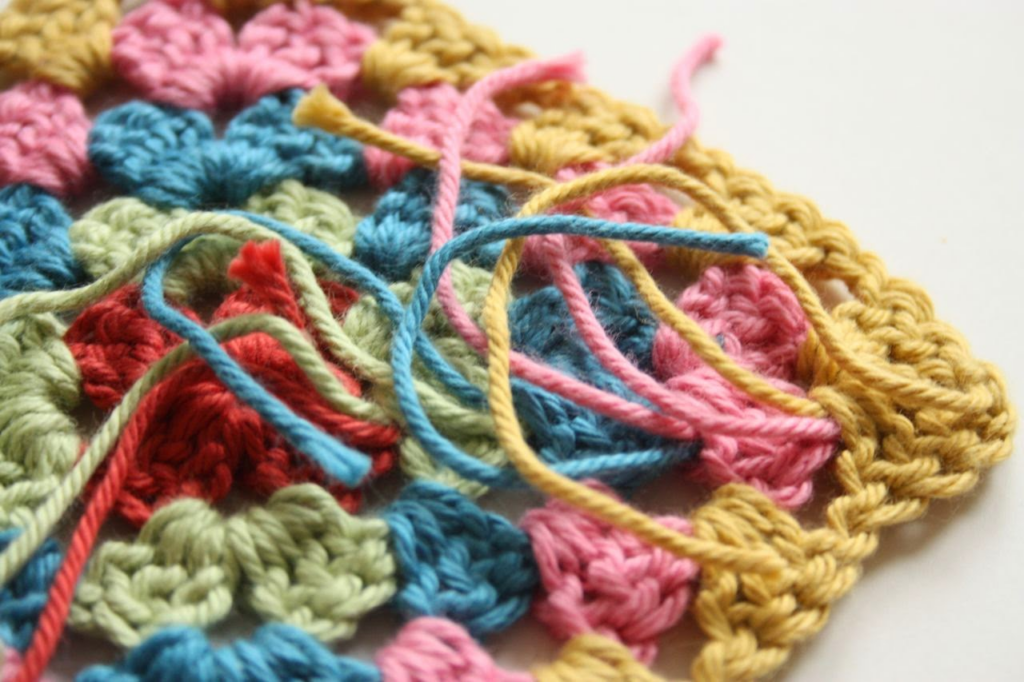
Why Weaving in Ends Matters
Think of ends as the unsung heroes of your knitting.
You can spend weeks making the perfect sweater, but if those tails peek out or start to unravel, that’s all you’ll see.
A well-woven end blends into the fabric, keeps everything secure, and makes your project look polished.
When to Weave as You Go (and When to Wait)
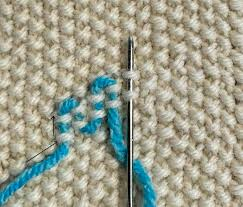
Some knitters like to tuck in ends as they go so there’s less finishing at the end. Others prefer to leave all the ends dangling until the last stitch is bound off.
Both approaches work—you just need to pick what makes sense for your project.
For colorwork, weaving as you go can keep things neat. For delicate yarns or pieces where you want more control, it’s often better to wait until the very end.
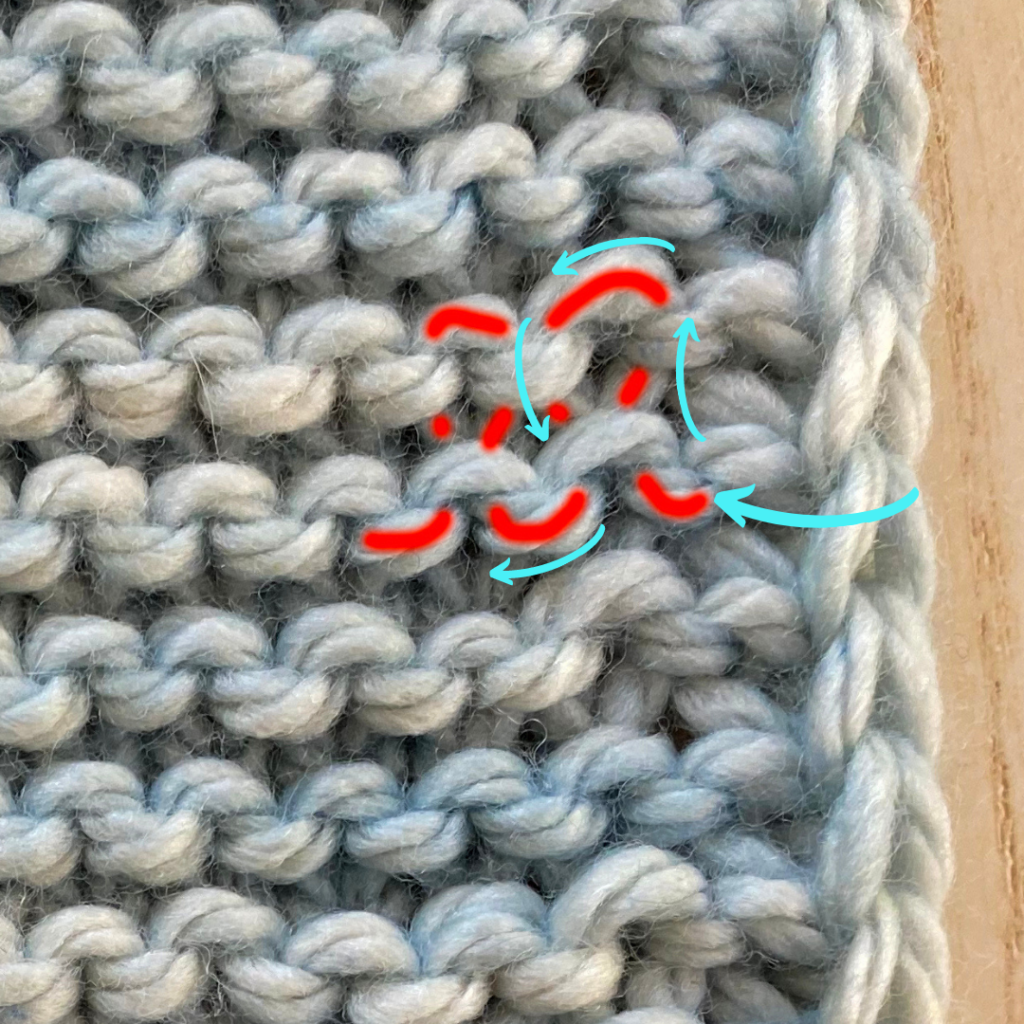
How to Weave into Different Stitches
- Stockinette: Thread your needle along the “V”s on the wrong side to keep the end invisible.
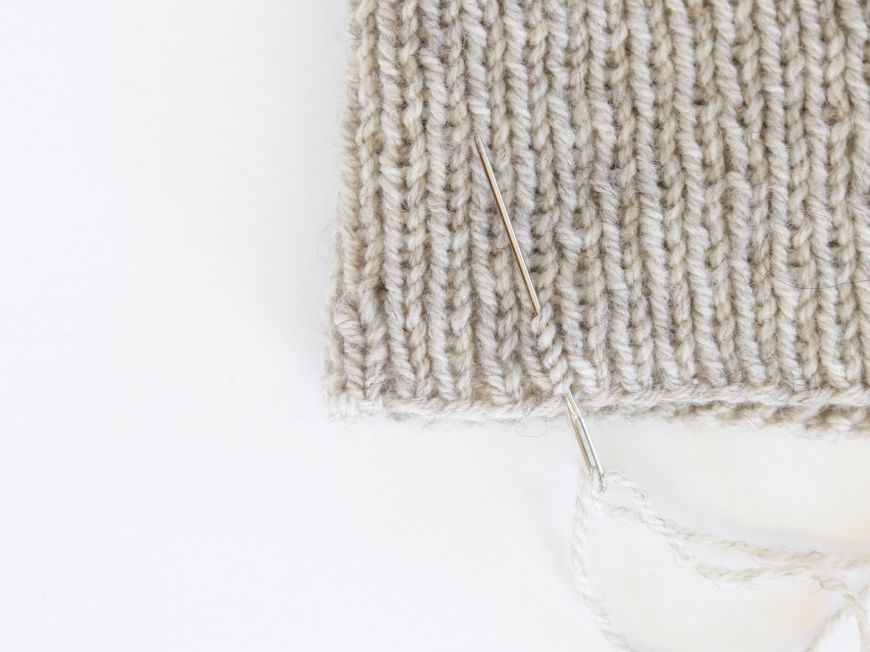
- Ribbing: Follow the knit and purl columns, so the tail hides in the texture.
- Garter: Skim under the bumps for a secure, bouncy finish that won’t show through.
Each stitch has its own little hiding spot—you just have to know where to look.
Wool vs. Plant-Based Yarns
Wool tends to grab onto itself, which makes it forgiving.
Cotton and linen, though, can be slippery, so you’ll want to weave in a longer tail and zigzag it through different directions.
Think of it as giving the yarn extra chances to hold on.
Avoiding Bulky Joins in Lightweight Garments
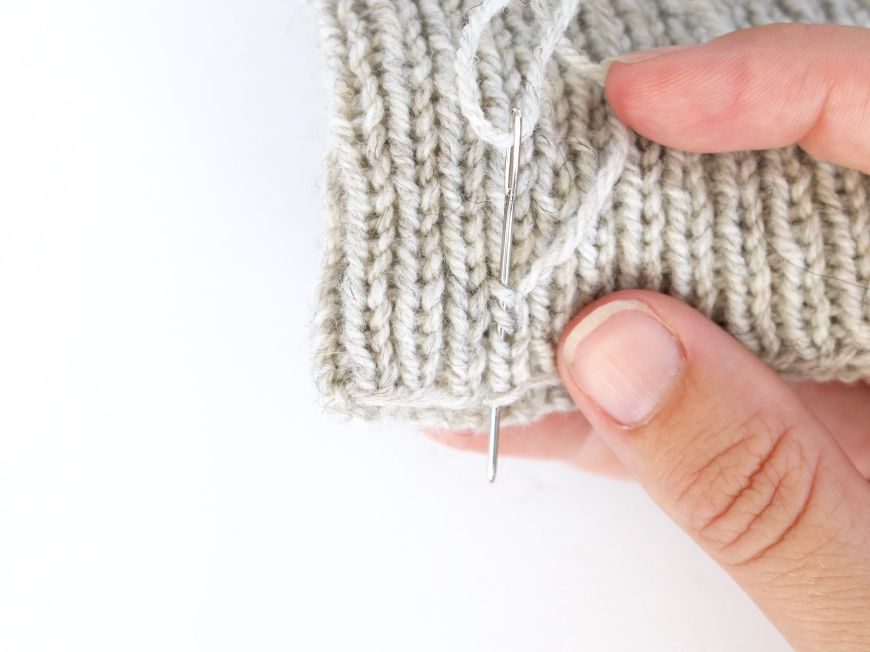
Nothing spoils a floaty summer top like a big lump where your yarn ends meet.
The trick is to spread the tail out—split the plies, weave in different directions, and keep it light.
That way the join disappears into the fabric instead of sitting on top of it.
Colorwork Complications
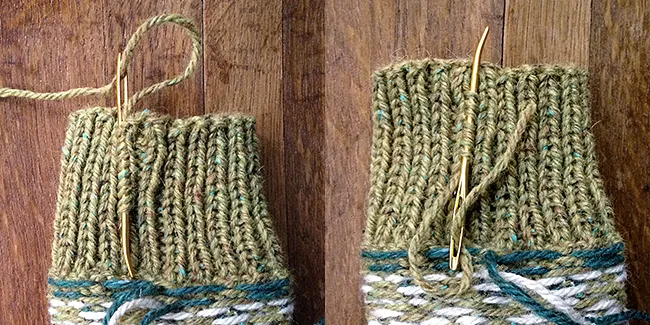
Stranded knitting means lots of ends.
The key here is to keep your weaving consistent—always on the wrong side and always in the same direction.
That way you don’t end up with shadows or uneven patches showing through your colorwork.
Anchoring Slippery Yarns
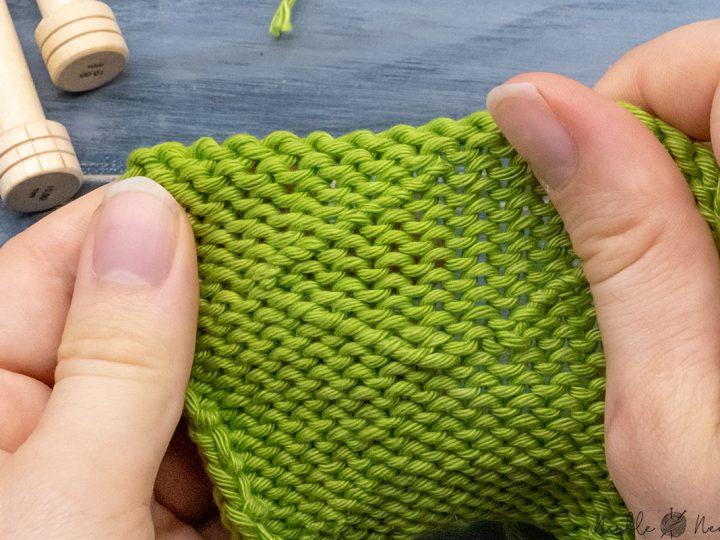
Silk, mercerized cotton, and superwash wool can all wiggle loose because they’re smooth and don’t grab onto neighboring fibers.
To keep those ends secure, try weaving them through a few stitches, then split the yarn tail with your needle and pass through it before continuing. That little loop “locks” the tail so it’s less likely to sneak out later.
Another trick is to weave the tail in two different directions—back one way, then forward another—to give it extra grip.
Wrapping It Up (Without Extra Ends)
Ends might seem like an afterthought, but they’re the quiet detail that can make or break a project. A smooth finish means your sweater looks neat, your shawl drapes the way it should, and your stitches stay put through years of wear.
With a few simple tricks—like weaving with the stitch pattern, adjusting for fiber type, and locking in those slippery yarns—you can turn what feels like busywork into the last satisfying step of finishing.
So the next time you set your needles down, take a minute to give those ends the same care you gave every stitch. It’s a small step, but it makes your project feel truly finished.